Daylighting & potholing in Bakersfield
Expose buried lines with water and suction, so your crew sees the real depth and position before a bucket, auger or bore goes in.
Free quotes from independent Kern County hydrovac operators. We're the request service, not the crew.
What a daylighting job covers
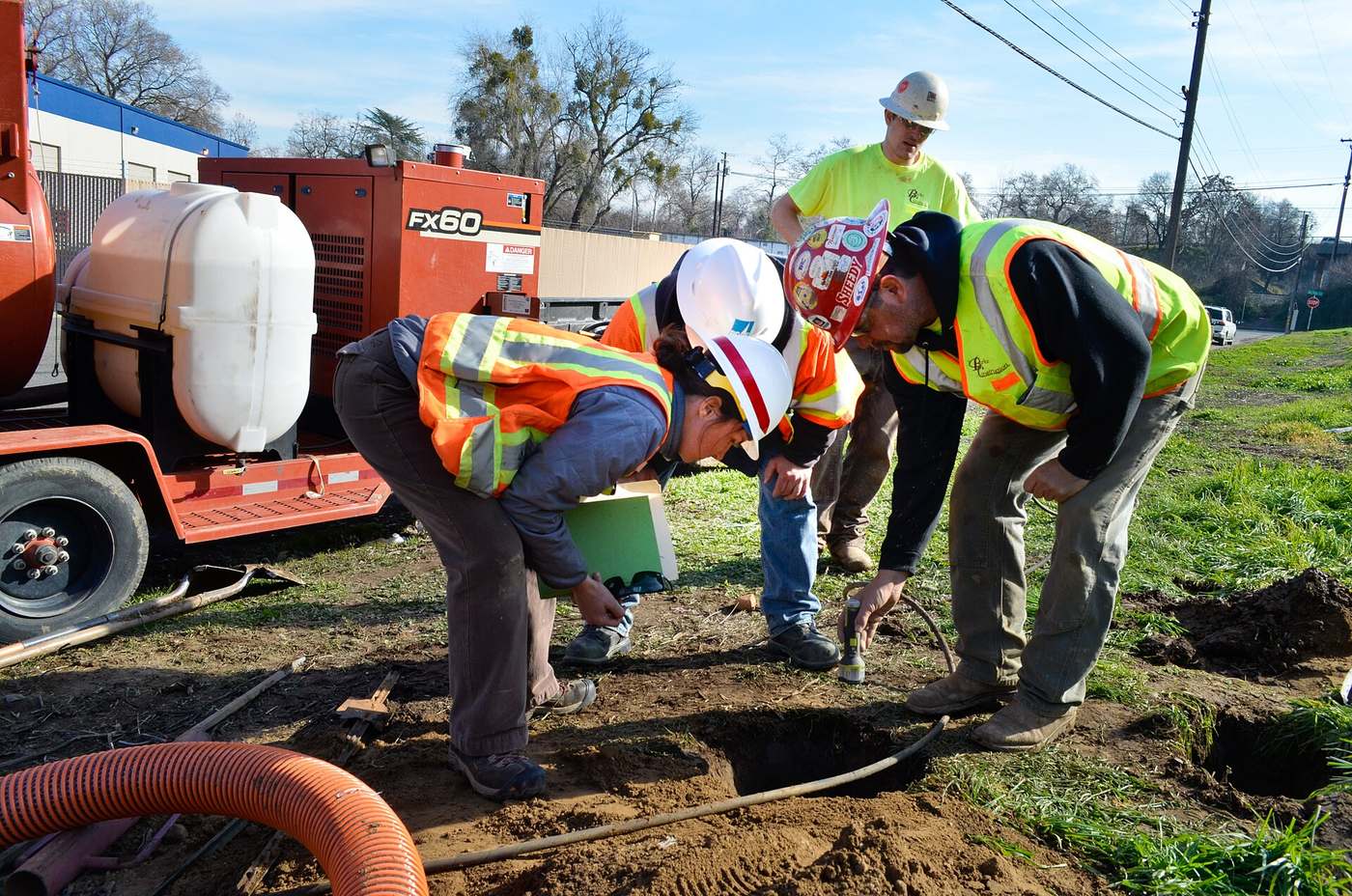
Daylighting means digging down to a buried line until you can see it. Potholing is the same work done as small, round test holes, usually one at each point where your new work crosses or runs close to an existing line. Most requests are some mix of the two.
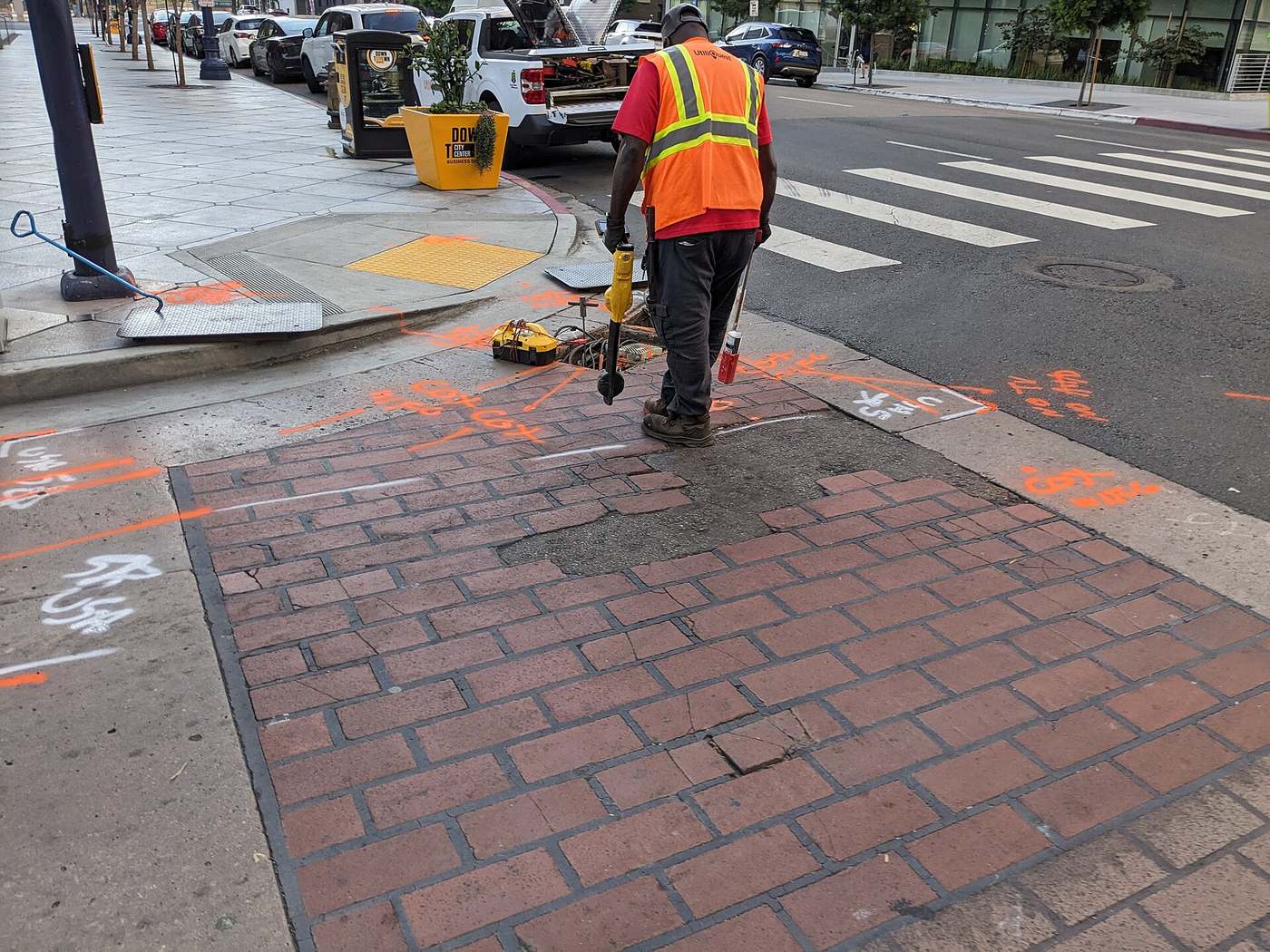
- Exposing the line at each crossing or conflict point, so the crew sees the pipe or cable itself, not a paint mark.
- Depth and details. Depth to top of line, plus size and material where visible. Ask if the operator will record it, with photos, if your engineer needs it.
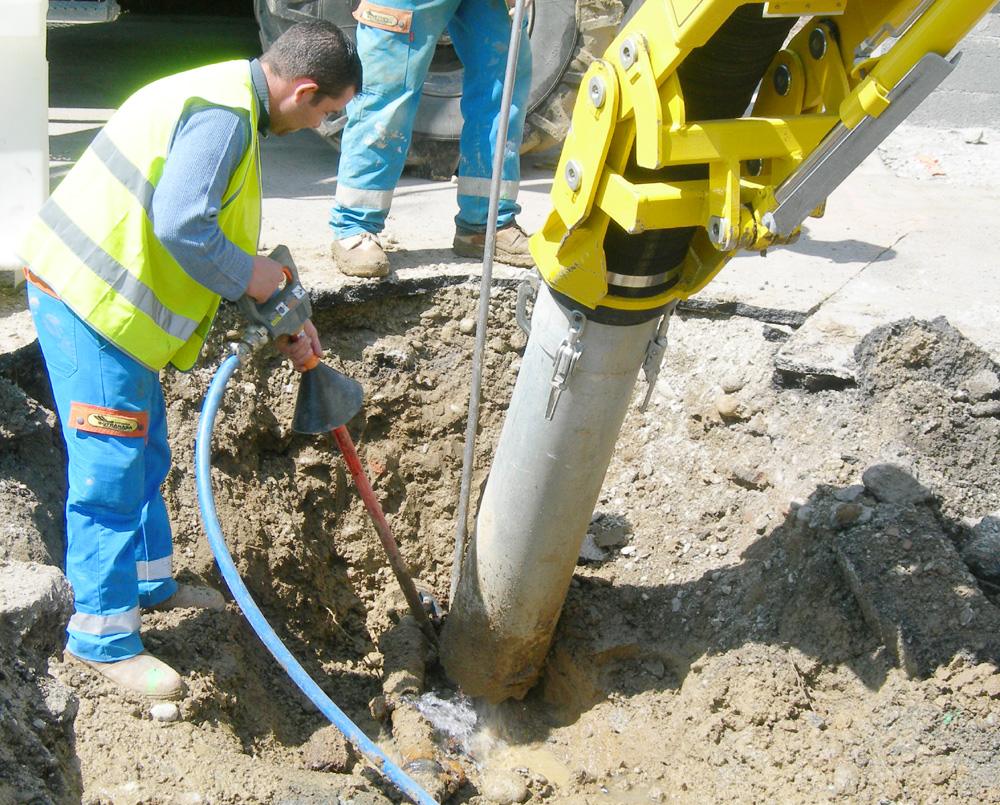
- A tight hole. Water and suction cut a narrow hole, so there is less spoil and a smaller patch in pavement.
- Backfill and restoration. Some quotes include filling the hole and a patch; some only expose the line. Ask which.
- Slurry. Spoil comes out as wet slurry in the truck's debris tank and has to go somewhere. See slurry hauling and disposal.
Equipment and method
A hydrovac truck carries a water tank, a pump, a hand-held wand that cuts the soil with a pressurized stream, and a vacuum system that lifts the slurry through a large hose into a debris tank. Operators set pressure and nozzle for the ground and for what is buried in it. Smaller trailer-mounted vacuum units also do potholing on tight sites.
Bakersfield ground
Much of the Bakersfield area sits on deep alluvial soil: layers of sand, silt and lean clay (general geotechnical reference). Water and suction work through all of them, but clay layers usually cut more slowly than sand, which changes how long each hole takes.
When you need potholing
- Before directional drilling or boring across existing lines.
- When a design crosses marked utilities and the engineer needs real depths. See test holes and utility locating.
- Before footings, poles, fence posts or signs close to locate marks.
- At pipeline and flowline crossings on oil leases.
- When the paint and the as-builts disagree, or a line is marked unknown.
- After a near miss, to find out what else is down there before work restarts.
What to have ready
- Your USA North 811 ticket number, or the date you plan to call.
- The dig area outlined in white paint or flags, with hole locations if you have them.
- Number of holes, the depth you expect, and the utilities you expect to cross.
- The surface: dirt, gravel, asphalt or concrete. Cutting or coring may be extra.
- Access: gates, escorts, lease rules, room for the truck, traffic control in a street.
- Where the truck can get water and where slurry can go.
- Prevailing wage, certified payroll or insurance certificate requirements.
Rules before the first hole
Potholing is excavation, so the same notice rules apply to a single test hole as to a trench.
Your USA North 811 ticket
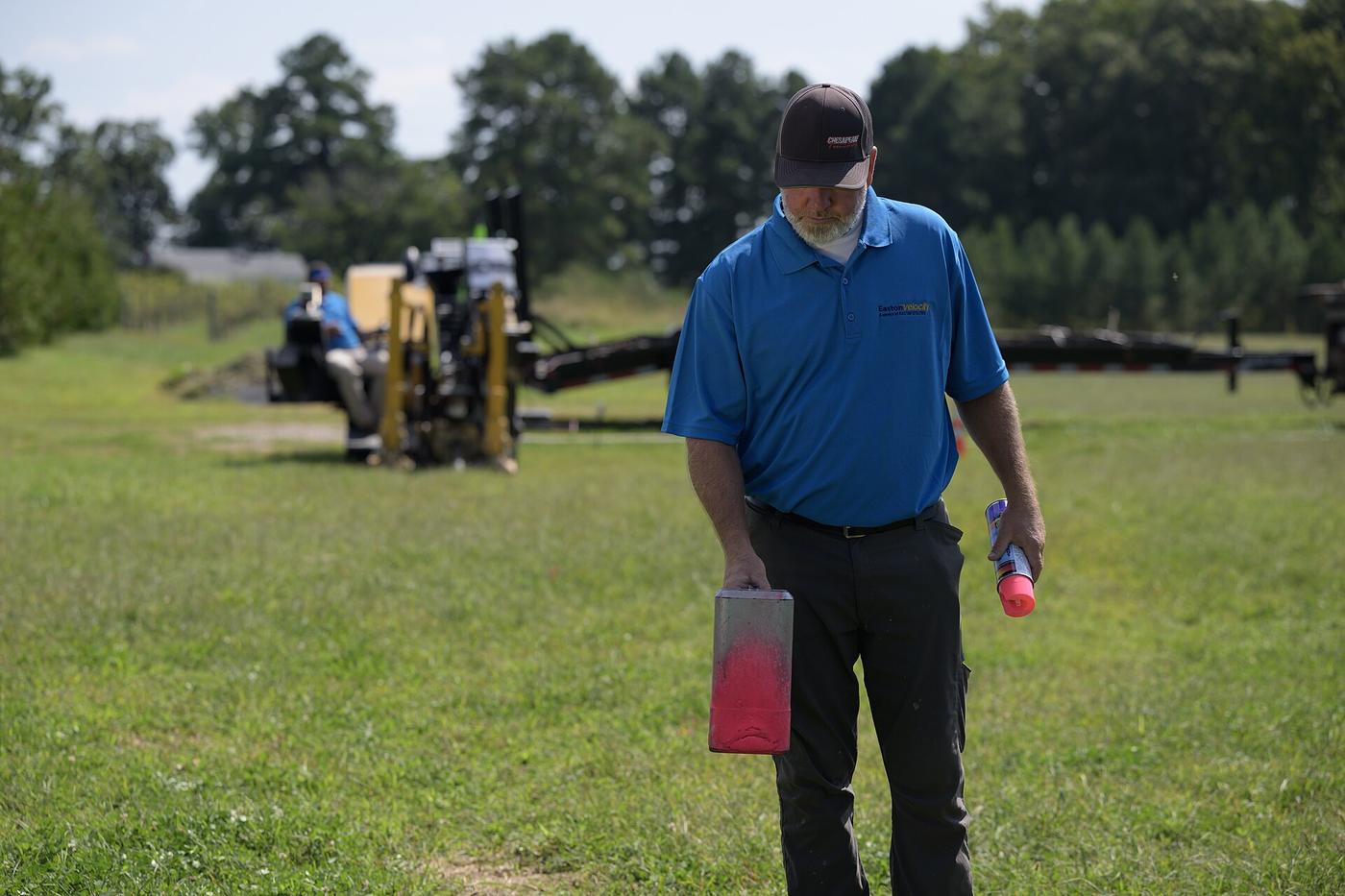
California Government Code 4216 requires notice to the regional one-call center, USA North 811 for Kern County, at least 2 working days before you dig, not counting the day you call, and no more than 14 calendar days ahead. Tickets are generally good for 28 days. (Code text, Energy Safety on 811.)
Who owns the road
Holes in a public street or highway usually need a permit from whoever owns it: the City of Bakersfield, Kern County or Caltrans. Check before you book a crew, because the operator will need the permit conditions and hours.
The line owner's conditions
Some utilities and pipeline operators want their own standby person on site when their line is exposed. Ask the owner early and put it in your request.
Potholing questions
TermsWhat is the difference between daylighting and potholing?
They use the same method. Daylighting usually means exposing a line along a stretch so it can be seen or worked on. Potholing usually means small, round test holes at single points to confirm depth and position. Many quotes cover both.
HolesHow many potholes do I need?
One at each point where your work crosses or comes close to a marked line is the usual starting point. Your engineer, the line owner or a permit may ask for more. Send the plan or a marked-up photo and operators will tell you what they would dig.
DepthHow deep can a pothole go?
It depends on the truck, the hose and the ground. Tell operators the depth you expect the line to be at, and they will say whether their equipment reaches it.
RecordsWill I get depths and photos for each hole?
Ask for it in your request. Many operators can note depth to top of line, size and material for each hole and take photos, which engineers and line owners often want. Agree the format before the crew arrives.
BackfillWho fills the holes back in?
It varies. Some quotes include backfill and a patch, some only expose the line. Say which you need, and whether the spoil can go back in or clean material is required.
811Do I still need an 811 ticket for a few test holes?
Yes. California Government Code 4216 applies to excavation, and hydrovac potholing is excavation. Call USA North 811 at least 2 working days before you dig, not counting the day you call.