Slot trenching in Bakersfield
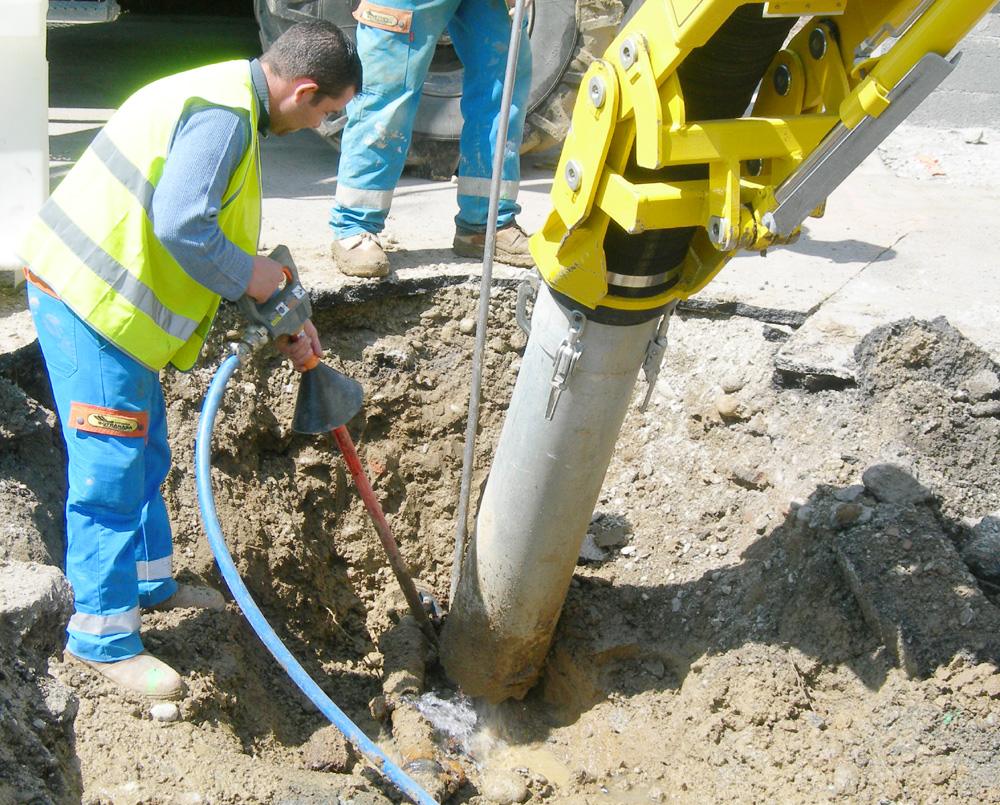
A narrow trench cut with water and suction, for fiber, conduit and small lines that have to go in close to what is already buried.
Free quotes from independent Kern County hydrovac operators. We're the request service, not the crew.
What a slot trench is
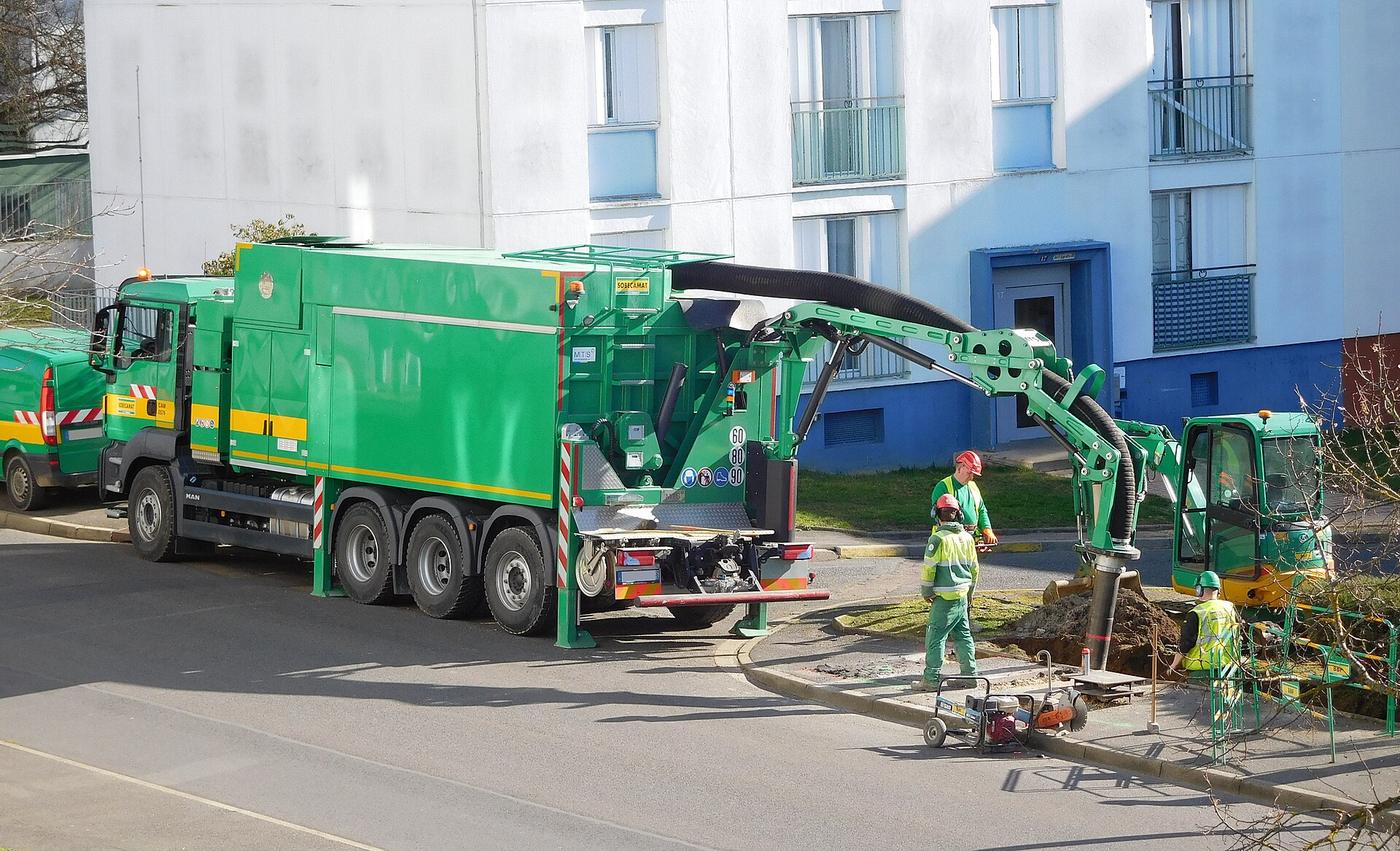
A slot trench is a long, narrow cut made with a pressurized water wand and a vacuum hose instead of a bucket. It is the same hydrovac method used for potholes, run along a line instead of at a point. Crews use it where a new run has to pass close to existing utilities, because water and suction can work around buried pipe and cable without striking them.
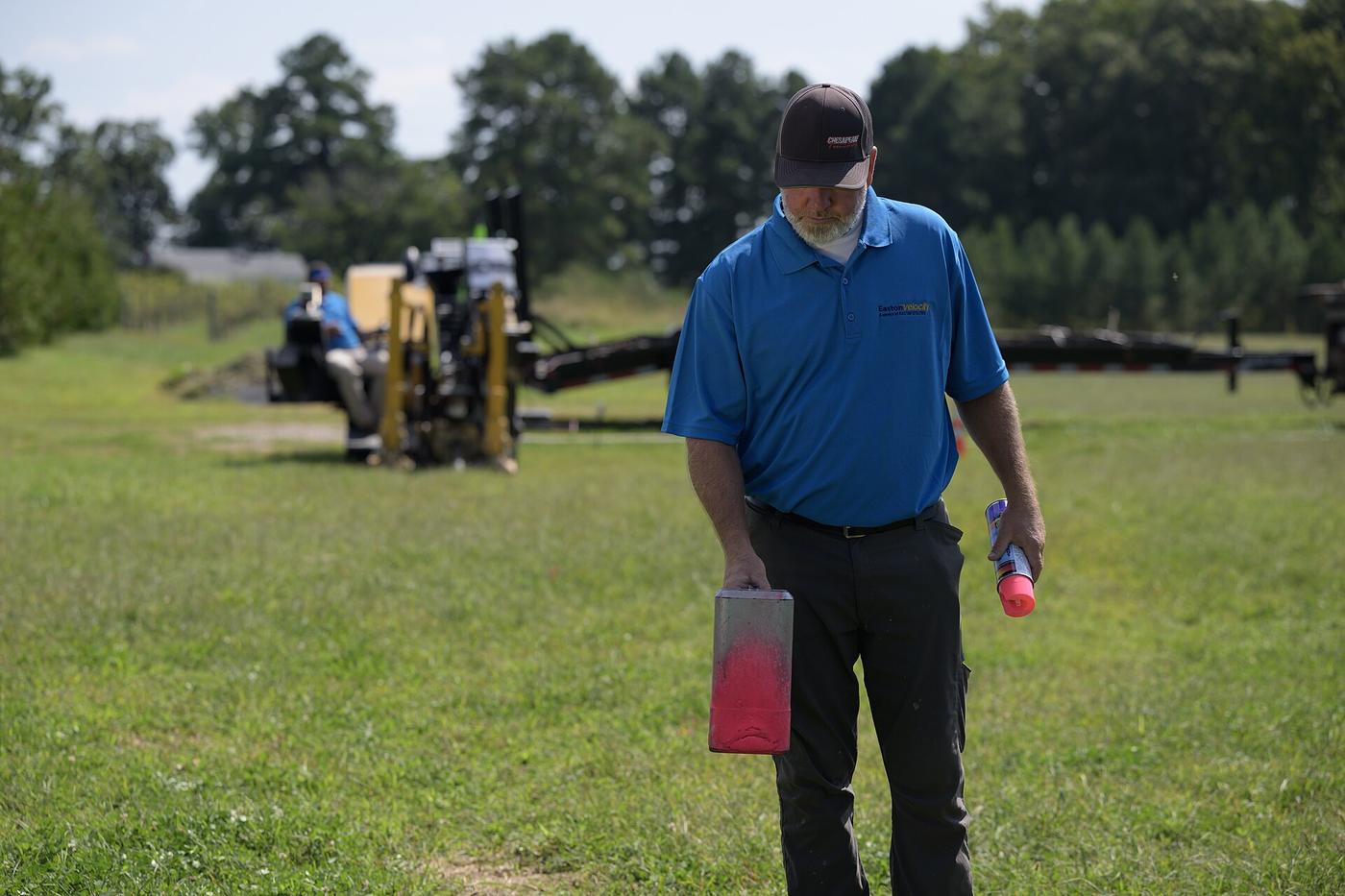
- Fiber and conduit. Telecom crews use slots for short runs, laterals and crossings where a trencher or a bore would risk other lines.
- Utility contractors. Small gas, water and power services that run beside existing mains.
- Ag and rural work. Irrigation lines and buried power across farm ground, where lines are rarely mapped well.
- Combined with potholes. Many jobs open test holes first, then slot between them. See test holes and daylighting.
- Spoil. A trench makes a lot of wet slurry. Plan where it goes. See slurry hauling and disposal.
Equipment and method
The operator sets water pressure and nozzle for the ground and cuts the slot to the width and depth you specify. A hydrovac truck carries the water and the debris tank; slurry is vacuumed straight into the tank as the wand works. Ask whether backfill, compaction and surface restoration are in the quote.
Bakersfield ground
Much of the Bakersfield area sits on deep alluvial soil: layers of sand, silt and lean clay (general geotechnical reference). Clay usually cuts more slowly than sand, so the same length of trench can take longer in one block than the next. Tell operators what you know about the soil, and ask if they expect it to change the schedule.
When a slot trench fits
- A fiber or conduit run has to pass close to gas, power or water lines.
- The marks are crowded or uncertain and a machine bucket is too risky.
- A short run follows test holes that have already shown where the other lines are.
- A farm or rural job has buried irrigation or power lines nobody can place exactly.
- The surface is landscaped or finished, and a narrow cut means a smaller patch.
What to have ready
- Length of trench in feet, and the width and depth you need.
- The surface: dirt, asphalt or concrete. Cutting or coring may be extra.
- Crossings with marked lines, and any plans showing the route.
- Whether backfill, compaction and surface restoration are included.
- Your USA North 811 ticket number, or the date you plan to call.
- Access, traffic control, and where water comes from.
- Where slurry can go, and any prevailing wage or insurance requirements.
Rules before the first foot
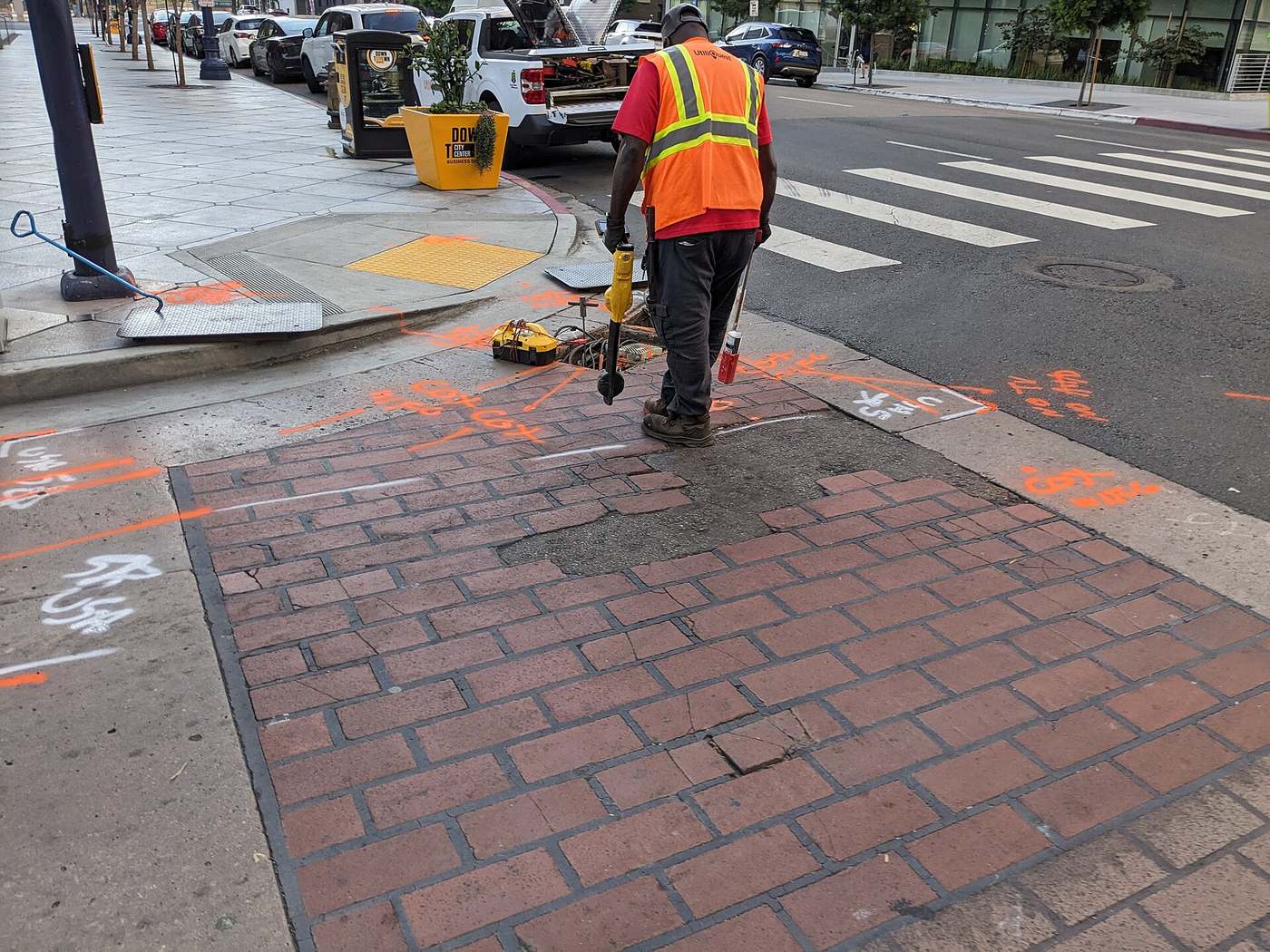
A trench is the textbook case for the 811 rules: the notice covers the whole dig area, so mark the full route.
Your USA North 811 ticket
California Government Code 4216 requires notice to the regional one-call center, USA North 811 for Kern County, at least 2 working days before you dig, not counting the day you call, and no more than 14 calendar days ahead. Tickets are generally good for 28 days. (Code text, Energy Safety on 811.)
Permits and the right of way
A trench in a public street, shoulder or sidewalk usually needs a right-of-way permit from the owner: the City of Bakersfield, Kern County or Caltrans. Check the permit conditions and working hours before you book, and give them to the operator.
The line owner's conditions
Some utilities want their own representative on site when their line is exposed. Ask each owner early and put it in your request.
Slot trenching questions
MethodHow is slot trenching different from using a mini-excavator?
A mini-excavator digs with a bucket, which can strike buried lines. A slot trench is cut with water and suction, so it is chosen near existing utilities. For a long run through clear ground a machine may be faster, so ask operators what they would recommend.
SizeHow narrow and how deep can a slot trench be?
It depends on the truck, the nozzle and the ground. Tell operators the width and depth your line needs and they will say whether they can cut it, rather than you relying on a number from a web page.
BackfillIs backfill included?
It varies by quote. Some include backfill and compaction, some only cut the slot. Say what you need, including surface restoration in a street or sidewalk.
SurfaceCan a slot trench cross a sidewalk or pavement?
Usually the surface has to be cut or cored first, and the city or county may want a permit and a patch. If you want to avoid cutting it, ask operators about boring with test holes on each side.
811Do I need an 811 ticket for a slot trench?
Yes. California Government Code 4216 applies to excavation, and a hydrovac trench is excavation. Call USA North 811 at least 2 working days before you dig, not counting the day you call.